
Sapphire: what it is, where it comes from, and why it matters
Gemstone Education
Sapphire: what it is, where it comes from, and why it matters
The Colored Stone Co. · May 2026 · 8 min read
Sapphire is one of the world's most prized gemstones — and one of the most frequently misunderstood. Most people associate the word with a single colour: blue. But sapphire comes in nearly every colour in the spectrum, shares a mineral family with ruby, and has been set in the engagement rings and crowns of royalty for centuries.
If you're new to gemstones — or considering a sapphire for an engagement ring, pendant, or any piece of jewellery — this guide covers everything you need to know: what sapphire is, where it comes from, what the different colours mean, and how it compares to other precious stones.
What is a sapphire?
Sapphire is a variety of the mineral corundum (aluminium oxide). It's one of the hardest minerals on earth, rated Mohs 9 on the Mohs hardness scale — second only to diamond (Mohs 10). This exceptional hardness is one of the reasons sapphire has been used in fine jewellery for thousands of years. It doesn't scratch easily, it polishes brilliantly, and it holds up to daily wear better than almost any other coloured gemstone.
The key fact many people don't know: sapphire and ruby are the same mineral. Both are corundum. The difference is colour — red corundum is classified as ruby; all other colours of corundum are sapphire. This includes blue, pink, violet, yellow, white, and even orange. Corundum with no colour-producing trace elements is called White Sapphire or Colourless Sapphire.
What gives sapphire its colour? Trace elements present during formation. Blue sapphire owes its colour to iron and titanium. Pink and violet sapphires contain chromium (the same element that colours ruby red, just in different concentrations). Yellow sapphires contain iron. Understanding this helps explain why the colour varies so much even between sapphires from the same mine.
Sapphire colours: far more than just blue
Blue is the colour most associated with sapphire, and for good reason — blue sapphires are typically the most valuable and most sought-after. But sapphire's natural colour range is remarkable. Here's a guide to the main colour varieties and what makes each one special.
BLUE SAPPHIRE
The most prized blue sapphires display a vivid, velvety cornflower blue — the specific tone associated with the finest Ceylon (Sri Lankan) stones. Blue ranges from pale sky blue all the way to deep inky navy. The ideal colour is strong and saturated without appearing dark or "inky" in low light. Ceylon blue sapphires are considered the world standard.
PINK SAPPHIRE
Pink sapphires range from pale baby pink to vivid magenta. The distinction between a pink sapphire and a ruby is a matter of chromium concentration — below a certain saturation, red corundum is called pink sapphire rather than ruby. Ceylon pink sapphires are celebrated for their delicate, natural colour. The exceptional variety — padparadscha — sits between pink and orange, and is among the rarest and most valuable sapphires in the world.
VIOLET SAPPHIRE
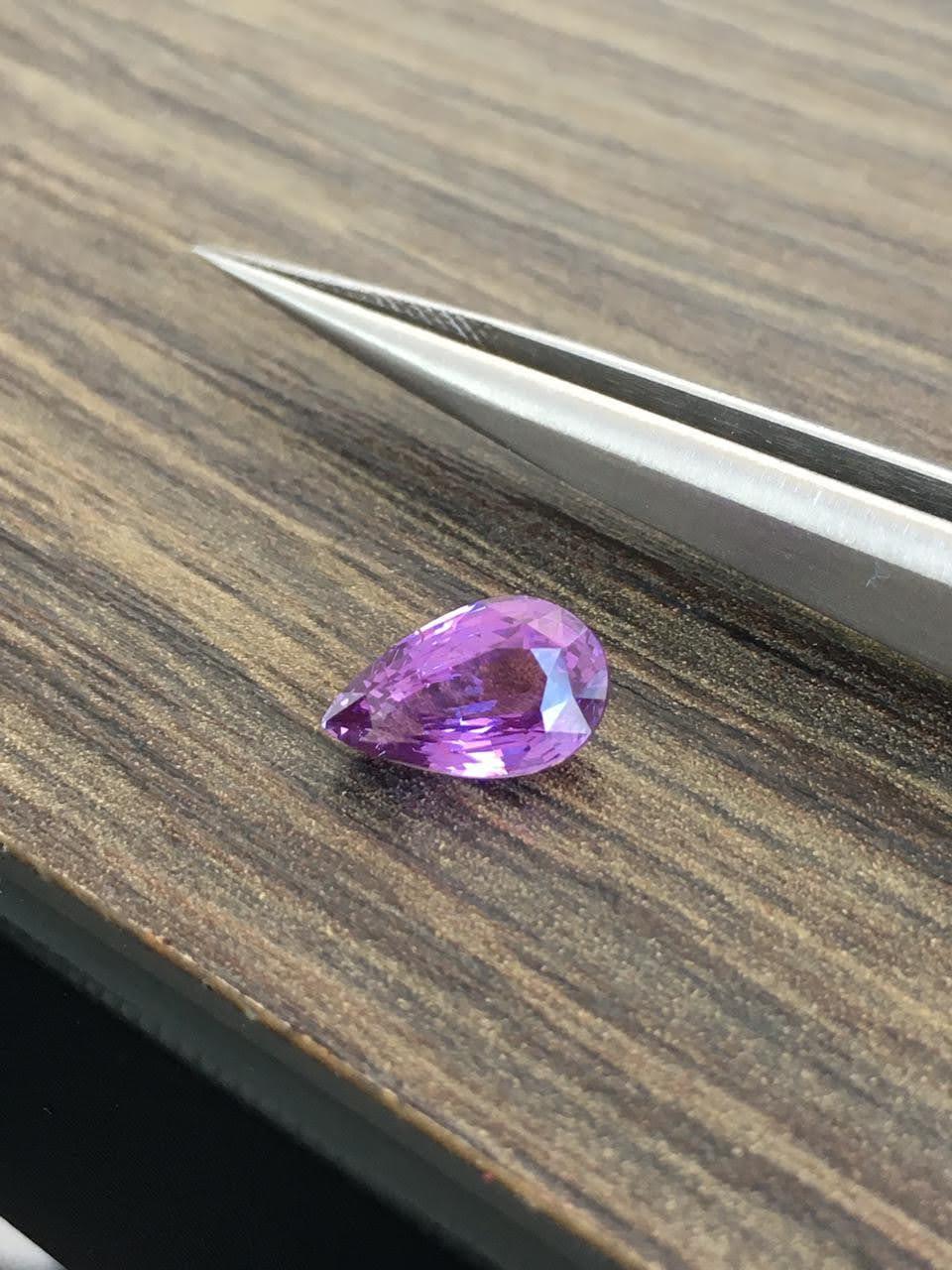
Violet sapphires occupy the space between blue and purple. Ceylon violet sapphires are particularly prized — the colour is distinct from both blue and purple, with a softness that works beautifully in engagement rings for buyers who want something unusual without straying too far from traditional sapphire colours.
YELLOW SAPPHIRE
Yellow sapphires range from pale lemon to deep golden. They're coloured by iron rather than chromium, which gives them a warmer, brighter tone than blue or pink sapphires. Yellow sapphire is also one of the most accessible sapphire colours in terms of price — offering the full Mohs 9 durability of sapphire at a more accessible price point than fine blue or pink stones.
WHITE SAPPHIRE
White sapphire contains no trace elements — it's pure corundum. It appears colourless, similar to diamond at a glance, but with less brilliance and fire (the dispersal of light into rainbow colours). White sapphire is the most accessible sapphire option by price, and at Mohs 9, it offers the same durability as every other sapphire colour.
| Colour | Caused by | Rarity | Best known for |
|---|---|---|---|
| Blue | Iron + titanium | Most valuable colour | Classic engagement rings |
| Pink / Padparadscha | Chromium | High; Padparadscha is exceptional | Romantic engagement rings |
| Violet | Chromium + iron | Medium-high | Distinctive, unusual tone |
| Yellow | Iron | Medium | Warm, accessible alternative |
| White | No trace elements | Most accessible price | Diamond alternative |
Where do sapphires come from?
Sapphires are found in several countries — but not all origins are equal in the gemstone trade. Origin affects both the colour characteristics of a stone and its market value. The major sapphire-producing regions are:
SRI LANKA (CEYLON)
Sri Lanka — known historically in the gem trade as Ceylon — is considered the world's finest source of sapphires. The island has been producing gem-quality corundum for over 2,000 years. Ceylon sapphires are characterised by their vivid, velvety blue colour with strong saturation and excellent clarity. Ceylon is also the world's primary source of pink, violet, and padparadscha sapphires. "Ceylon origin" appears on gemstone certificates and commands a significant market premium.
KASHMIR (INDIA)
Kashmir sapphires are the rarest and most expensive in the world. The mines were largely exhausted in the late 19th and early 20th centuries, making fine Kashmir stones extraordinarily scarce today. They're characterised by a unique "cornflower blue" with a velvety, almost sleepy quality of colour. Kashmir origin on a certificate can multiply a stone's value several times over.
BURMA (MYANMAR)
Burma produces both rubies and sapphires of exceptional quality. Burmese sapphires tend towards a rich, vivid blue — slightly darker and more intense than Ceylon stones.
MADAGASCAR
Madagascar has become the world's largest sapphire producer by volume since the 1990s, producing a wide range of blue, pink, and yellow stones. The quality range is broad — from commercial grade to fine stones that rival Ceylon quality. Madagascar stones are typically priced below Ceylon equivalent quality due to origin.
| Origin | Known For | Relative Pricing |
|---|---|---|
| Kashmir | Velvety cornflower blue; extreme rarity | Highest (museum-grade) |
| Ceylon (Sri Lanka) | Vivid blue; finest pink & padparadscha; full colour range | Premium |
| Burma | Deep, rich blue | Premium |
| Madagascar | Wide quality range; high volume | Mid-range |
| Australia / Thailand | Darker blue, often heat-treated | Commercial |
Why sapphire is ideal for engagement rings
Sapphire is the most popular alternative to diamond for engagement rings — and it has been for centuries. There are practical reasons and personal ones.
Durability: At Mohs 9, sapphire is scratch-resistant against virtually everything in daily life. No corundum — household dust, countertops, keys — rates higher than 7–8 on the Mohs scale. An engagement ring is worn every day for decades; sapphire handles that wear better than any coloured gemstone other than diamond.
Colour choice: Diamond is always white. Sapphire gives you blue, pink, violet, yellow, or white — without sacrificing hardness. For buyers who want their ring to feel personal and distinctive, sapphire offers options that diamond simply doesn't.
Value: A fine Ceylon sapphire at a given carat weight costs significantly less than a comparable diamond. You get more visible colour, more character, and a stone with genuine provenance — at a price that reflects the stone's quality, not a marketing legacy.
We source our sapphires directly in Sri Lanka — which means Ceylon provenance confirmed at origin, not bought through intermediaries. Every centre stone comes with third-party certification from a recognised gemological lab. Read our full Ceylon sapphire guide for details on sourcing, certification, and the full colour range we work with.
Heat treatment: what it is and why it matters
The vast majority of sapphires on the market have been heat treated — heated to high temperatures (typically 1,500–1,800°C) to improve colour and clarity. This is a permanent, stable treatment that's widely accepted in the gemstone trade. Heat treatment has been practised for centuries and is disclosed on certificates.
Unheated sapphires — stones with no evidence of heat treatment — command a significant premium because their colour is entirely natural. A fine unheated Ceylon blue sapphire is among the most valuable coloured gemstones in the world. A certificate from a well-established local lab such as CGJ or GIC will specifically note "no indication of heating" when a stone is unheated.
For most buyers, a well-selected heat-treated sapphire offers excellent colour and value. For collectors and buyers who prioritise natural provenance above all, unheated stones are the goal — and they're available, at a higher price.
Ready to explore Ceylon sapphires?
Our Ceylon sapphire guide covers every colour, pricing, certification, and how to choose the right stone for your piece. Or browse our sapphire rings collection to see what's available.
💬 Chat with Us on WhatsAppSapphire vs diamond: a quick comparison
The most common question for engagement ring buyers: sapphire or diamond? Both are excellent choices for daily-wear rings. Here's how they compare.
| Sapphire | Diamond | |
|---|---|---|
| Hardness | Mohs 9 | Mohs 10 |
| Toughness | Excellent (no cleavage) | Good (has cleavage planes) |
| Colour range | Blue, pink, violet, yellow, white | Primarily colourless; some fancy colours |
| Brilliance | Strong colour, good brightness | Exceptional fire and brilliance |
| Daily wear | Excellent | Excellent |
| Price (per carat) | Generally lower than equivalent diamond | Higher for comparable quality |
Frequently asked questions about sapphire
What is a sapphire stone?
Sapphire is a variety of the mineral corundum (aluminium oxide), rated Mohs 9 — the second hardest mineral after diamond. It comes in a range of colours including blue, pink, violet, yellow, and white. Blue is the most prized and well-known colour. Sapphire is classified as one of the four traditional precious gemstones alongside diamond, ruby, and emerald.
What colours do sapphires come in?
Sapphire occurs in nearly every colour: blue (most valuable), pink (including the rare padparadscha variety), violet, yellow, and white. It also comes in teal, green, and orange varieties. Any corundum that isn't red is classified as sapphire — red corundum is ruby. All colours share the same Mohs 9 hardness.
Is sapphire good for an engagement ring?
Yes — sapphire is excellent for engagement rings. At Mohs 9 with excellent toughness, it's the most durable coloured gemstone for daily wear. It offers colour choices that diamond doesn't, and fine Ceylon sapphires cost significantly less than comparable diamonds. Sapphire engagement rings have been popular with royalty for centuries and have seen a strong resurgence in the past decade.
What is a Ceylon sapphire?
Ceylon is the historical name for Sri Lanka, widely used in the gemstone trade. A Ceylon sapphire is one mined in Sri Lanka — considered the world's finest sapphire origin. Ceylon sapphires are prized for their vivid, velvety blue colour and excellent clarity. Ceylon is also the world's primary source of padparadscha sapphires. "Ceylon origin" on a gemstone certificate commands a market premium over sapphires from other origins.
Is sapphire the same as ruby?
Sapphire and ruby are the same mineral — corundum. The difference is colour: red corundum is classified as ruby; all other colours are classified as sapphire. Both share the same Mohs 9 hardness and are classified as precious gemstones.
Are sapphires heat treated?
The majority of sapphires on the market are heat treated — heated to high temperatures to improve colour and clarity. This is a permanent, stable, widely accepted treatment that's fully disclosed on gemstone certificates. Unheated sapphires (with no treatment) command a significant premium and are noted as "no indication of heating" on certificates from major labs.
Interested in a sapphire ring or pendant?
We source and work with certified Ceylon sapphires across all colours. Tell us your budget and what you have in mind — we'll guide you through the options. Ships locally and internationally.
💬 Chat with Us on WhatsApp