
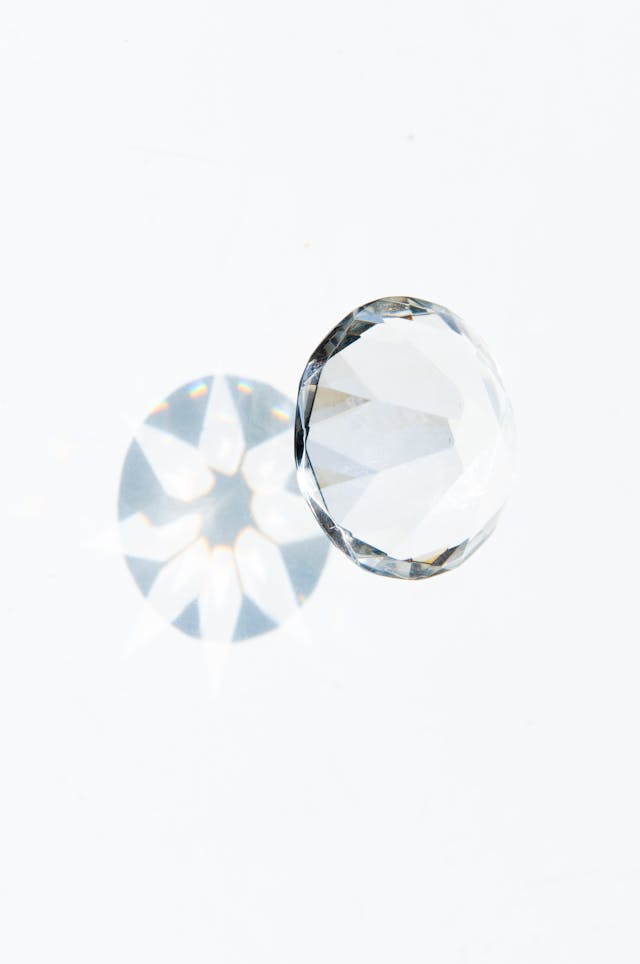
Are diamonds really rare? The truth about diamond scarcity
Gemstone Education
Are diamonds really rare? The truth about diamond scarcity
The Colored Stone Co. · May 2026 · 8 min read
Diamonds are synonymous with rarity. They come in small velvet boxes, they're called "forever," and they're positioned as the ultimate symbol of something precious and irreplaceable. But there's a question worth asking honestly: are diamonds actually rare?
The answer, like most things in the gemstone world, is more nuanced than the marketing suggests. Some diamonds are extraordinarily rare. Most are not. And when you compare diamond rarity against the gemstones that actually are scarce — Ceylon sapphires, alexandrite, padparadscha, fine rubies — the picture looks very different from what most engagement ring shoppers are told.
The short answer: it depends on the diamond
Diamond is a naturally occurring mineral — crystallised carbon formed under extreme heat and pressure, deep within the earth, over billions of years. In that sense, every natural diamond required extraordinary conditions to form. But "rare" as a commercial concept means something different: scarcity relative to demand.
Commercial-grade diamonds — the majority of what's sold in engagement rings worldwide — are produced in enormous quantities. The global diamond mining industry extracts approximately 130 million carats of rough diamond per year. That's a lot of diamonds. Major producers include Botswana, Russia, Canada, Australia, and the Democratic Republic of Congo, all with mines capable of producing millions of carats annually.
Certain diamonds genuinely are rare: coloured diamonds (pink, blue, red, orange), very large stones over 10 carats, internally flawless specimens, and stones from specific prestigious origins like the Argyle mine (now closed). These are the diamonds that sell for millions at auction and belong in a different conversation from a 0.75 ct round brilliant engagement ring.
How De Beers shaped the perception of diamond rarity
Much of the popular perception of diamond rarity was deliberately constructed. From the 1880s onwards, De Beers systematically purchased and controlled diamond mines across southern Africa, creating a cartel that managed supply — releasing diamonds to market slowly, regardless of how many were mined, to maintain the perception of scarcity.
The "A Diamond is Forever" campaign — launched by De Beers in 1947 — wasn't just an advertising slogan; it was a strategy to prevent the resale of diamonds, which would have flooded the market and collapsed prices. By convincing buyers that diamonds should never be sold, De Beers kept supply tightly controlled at the retail level too.
De Beers' market share has declined significantly since the 1990s (from roughly 90% to around 30%), and new producers like Russia and Canada operate independently. But the perception their marketing created — that diamonds are rare, precious, and irreplaceable — remains deeply embedded in consumer culture globally.
The gemstone industry has a term for perceived rarity versus actual rarity: "manufactured scarcity." It applies broadly — not just to diamonds. Understanding the distinction helps you make a better-informed purchase, whatever gemstone you choose.
Lab-grown diamonds: rarity removed entirely
Lab-grown diamonds are chemically, physically, and optically identical to natural diamonds — the same carbon crystal structure, the same Mohs 10 hardness, the same fire and brilliance. The difference is origin: lab-grown diamonds are produced in weeks in a controlled environment, not over billions of years underground.
Lab-grown diamonds have largely removed scarcity from the equation for buyers who prioritise the stone's physical properties over provenance. A lab-grown diamond of the same cut, colour, clarity, and carat weight as a natural diamond typically costs 70–80% less — reflecting the reality that the production constraint has been eliminated.
For buyers who value the idea that their diamond formed naturally over billions of years, natural diamonds retain that distinction. For buyers who prioritise what the stone actually is — a brilliant, hard, beautiful gem — lab-grown diamond rings offer the same properties at a fraction of the cost.
What is genuinely rare in the gemstone world?
Here's the question most engagement ring shoppers never get to ask: compared to what, exactly, are commercial diamonds rare? The answer may surprise you.
| Gemstone | Actual Rarity | Key Sources |
|---|---|---|
| Padparadscha Sapphire | Exceptionally rare — precise pink-orange colour; Sri Lanka only at quality | Sri Lanka |
| Alexandrite | Rarer than most diamonds; significant colour-change required | Sri Lanka, Russia, Brazil |
| Kashmir Sapphire | Mines exhausted; virtually no new supply | Kashmir (India) |
| Unheated Ceylon Blue Sapphire | Genuinely rare; most Ceylon sapphires are heat-treated | Sri Lanka |
| Paraíba Tourmaline | Rarer than diamonds; single valley in Brazil originally | Brazil, Mozambique |
| Commercial Diamond (0.5–2 ct, G-H, VS) | Produced in very large quantities; widely available | Global |
| Lab-Grown Diamond | Unlimited supply; price falling year on year | Manufactured |
Ceylon sapphires: genuinely rare and naturally coloured
Ceylon sapphires are mined in one country — Sri Lanka — from geological formations that have been producing gem-quality corundum for over 2,000 years. Unlike diamond, sapphire supply cannot be scaled up by opening a new factory or discovering an equivalent deposit somewhere more convenient. Ceylon origin is a finite, geographical fact.
Fine unheated Ceylon blue sapphires — stones whose colour is entirely natural, with no heat treatment — are genuinely scarce by any objective measure. Their rarity isn't manufactured; it's geological. The market premium on unheated Ceylon stones reflects real supply constraints, not a marketing narrative.
For buyers drawn to the idea of a genuinely rare, naturally coloured gemstone with a specific, verifiable origin, a fine Ceylon sapphire engagement ring offers something that commercial diamond marketing can't: authentic scarcity. At Mohs 9, the durability for daily wear is also exceptional — second only to diamond itself.
Curious about Ceylon sapphires as a diamond alternative?
We source certified Ceylon sapphires directly in Sri Lanka. Chat with us on WhatsApp and we'll walk you through what's available and how prices compare.
💬 Chat with Us on WhatsAppDoes rarity matter when choosing an engagement ring?
That depends entirely on what you value. There's nothing wrong with choosing a diamond — natural or lab-grown — as long as the choice is genuinely yours, informed by what matters to you rather than by assumptions you've absorbed from decades of marketing.
Some buyers value what a diamond represents culturally — the weight of that particular tradition. Others care most about what the stone actually is and how it performs as jewellery. And some are drawn to the idea of a genuinely rare stone with a specific origin story — which is where coloured gemstones like Ceylon sapphires, fine rubies, or alexandrite enter the picture.
What we'd suggest: make the choice based on what you actually want — not on what you've been told you're supposed to want. If you're uncertain, the diamond vs sapphire engagement ring comparison is a good starting point.
Frequently asked questions
Are diamonds really rare?
It depends on the diamond. Commercial-grade diamonds (the majority sold in engagement rings) are produced in very large quantities — around 130 million carats per year globally. Certain diamonds are genuinely rare: coloured diamonds (pink, blue, red), very large stones, and specific prestigious origins. The perception of broad diamond rarity was largely shaped by strategic supply management and marketing from the 20th century onward.
Are natural diamonds rare compared to lab-grown?
Yes — natural diamonds require billions of years and specific geological conditions to form, while lab-grown diamonds can be produced in weeks. Lab-grown diamonds are chemically and physically identical to natural diamonds, but the production constraint has been removed, which is why they cost 70–80% less. Natural origin is the key distinction for buyers who value provenance.
What gemstones are rarer than diamonds?
Several gemstones are rarer than commercial-grade diamonds: padparadscha sapphires (extremely rare; specific pink-orange colour only found at quality in Sri Lanka), alexandrite (genuine colour-change variety), fine unheated Ceylon blue sapphires, Paraíba tourmaline, and Kashmir sapphires (mines now exhausted). These gemstones represent genuine geological scarcity, not manufactured scarcity.
Are Ceylon sapphires rare?
Ceylon sapphires — from Sri Lanka — are genuinely scarce by origin: they can only come from one country, from specific geological formations that cannot be replicated elsewhere. Fine unheated Ceylon blue sapphires command a significant premium on the world market because their colour is entirely natural and their supply is finite. Ceylon origin is noted on gemstone certificates and is internationally recognised as a quality and rarity marker.
Is a sapphire a good alternative to a diamond for an engagement ring?
Yes — sapphire is the most popular diamond alternative for engagement rings and has been for centuries. At Mohs 9, it's the second hardest gemstone and handles daily wear exceptionally well. Ceylon sapphires offer natural colour in a range that diamonds don't provide, genuine provenance, and typically cost significantly less than a comparable diamond for the same carat weight.
Explore your options with us
We work with certified natural diamonds, lab-grown diamonds, and certified Ceylon sapphires. Tell us what matters most to you and we'll guide you to the right stone. Ships locally and internationally.
💬 Chat with Us on WhatsApp